Asian Art Federation
Origami 折り紙
Origami (折り紙) — the Japanese art of paper folding — is among the most widely recognized and deeply studied of all East Asian craft traditions: a practice whose apparent simplicity conceals a rich intellectual and material history spanning more than a millennium.
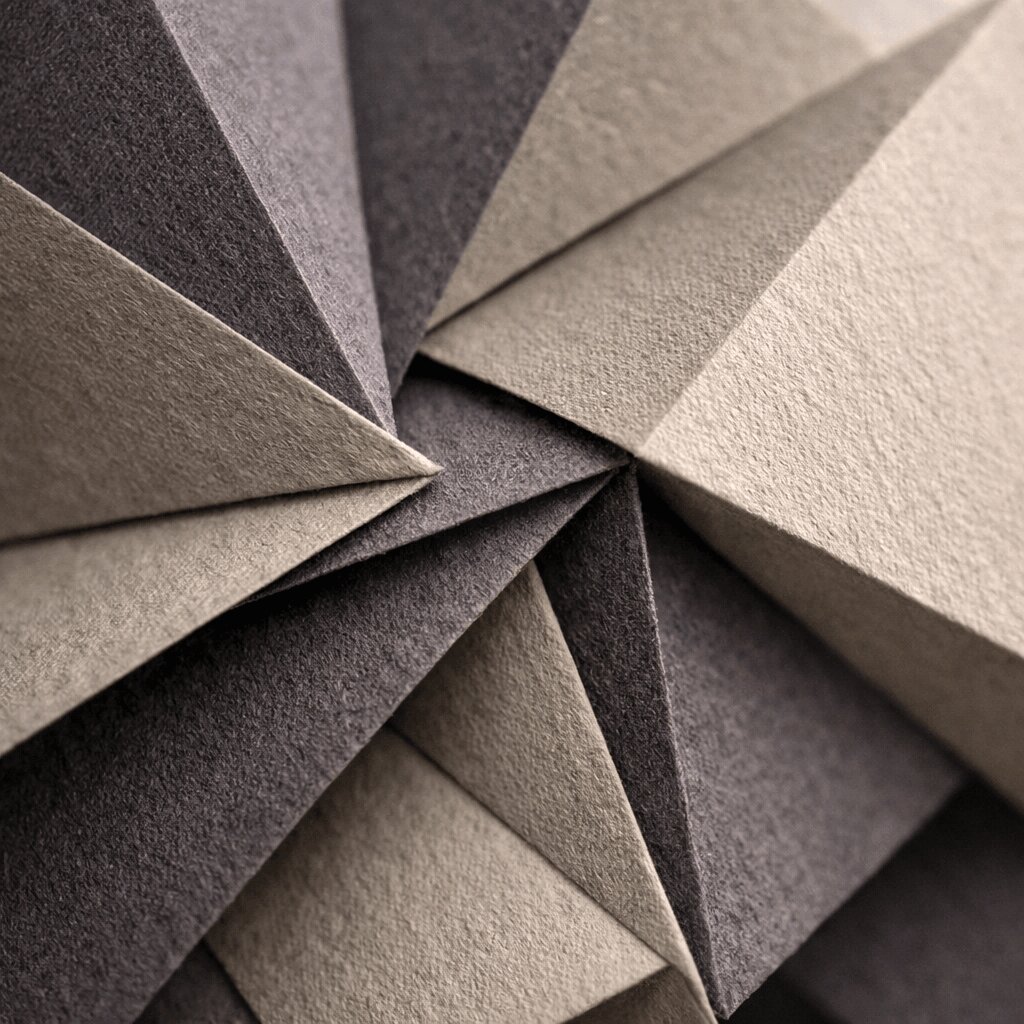
The word itself joins the Japanese verbs oru (折る, to fold) and kami (紙, paper) — though in its earliest Japanese forms the practice was known by other names: orikata, orisue, orimono. The term origami as applied to recreational folding only became common in Japan around 1890. Before then, what we now call origami existed in two largely separate registers: ceremonial ritual folding (girei-ori or origata), associated with Shinto and Buddhist practice, the samurai class, and court etiquette; and recreational folding, a popular tradition that flourished during the Edo period.
For the Asian Art Federation, origami presents a subject of particular richness: it is at once a tradition rooted in the history of paper as material culture, a vehicle of ritual and cosmological thought, a craft form with its own technical vocabulary and master lineages, and a practice that has participated in — and been transformed by — global exchanges between Asian and European artistic and educational traditions.
Subject Area
Paper Arts and Material Culture
Period
Early 7th Century CE – Present
Related Fields
Ritual Studies, Craft History, Mathematics and Design
Paper as Material and Medium
The Substance Beneath the Form
Any serious engagement with origami as a cultural tradition must begin with paper itself. Paper is not merely the material support of origami; it is its subject, its constraint, and its occasion. The history of origami is inseparable from the history of papermaking — and in Asia, that history begins in China.
Paper was invented in China, and a court official, Cai Lun, has been traditionally credited with standardizing its production around 105 CE — producing sheets from macerated bark, hemp waste, old rags, and fishnets. From China, papermaking technology transmitted to Korea, and from Korea to Japan, arriving with Buddhist monks by the early seventh century. What Japanese craftspeople did with that transmitted knowledge was transformative: they developed washi (和紙), a paper of exceptional thinness, strength, and foldability, qualities that made it the ideal medium for both ritual and recreational folding.
The very word kami (紙, paper) shares its pronunciation — though not its written character — with kami (神, deity) in the Shinto belief system. This phonetic coincidence was not lost on the Japanese. From the time paper was introduced to Japan, Shinto priests recognized its beauty, purity, and perfection as qualities also attributed to the gods. Folded paper became symbolic of prayer and offering; unblemished white paper was the ideal medium for expressing divine nature. When folded, it became a sign of divine presence.
Origins and Transmission
China, Korea, Japan — and the Question of Origins
The question of where paper folding originated is more contested than it might appear. Writing a comprehensive history of paper folding is almost impossible, since reliable documentation prior to the fifteenth century is virtually nonexistent. Many studies assert that origami was invented in Japan; others locate its origins in China; some researchers have argued for independent development in Europe. The evidence supports a more complex picture.
China has a long tradition of paper craft and paper symbolism. The practice of folding paper into gold ingot forms (yuanbao) for ceremonial burning at funerals can be traced to at least the ninth century CE, and continues today. Folded grave goods — paper representations of material objects intended to accompany the deceased — constitute a form of ritual paper folding with deep roots in Chinese culture. Whether this tradition directly influenced Japanese paper folding, or whether the two developed in parallel, remains unresolved.
“It seems unlikely that having invented paper, nobody in China thought to fold it — but there is no firm evidence that the Chinese are the originators of paper folding as we understand it.”
Inside Japan Tours — History of Origami
What is certain is that papermaking technology entered Japan from China via Korea in the early seventh century, transmitted by Buddhist monks. By the seventh century, paper had been introduced to Japan, and the Japanese developed washi by improving papermaking methods in the Heian period. The new paper’s responsiveness to folding — maintaining crisp creases while retaining strength — made it uniquely suitable for the ornamental and ritual uses that would develop over the following centuries.
There is also evidence of early paper folding in Europe: a picture of a folded paper boat appears in a French edition of a scientific text from 1498, and a cut-and-folded paper box has been dated to 1440. Some scholars have argued that European folding traditions may have reached Japan during the Meiji period (1868–), contributing to what we know today as origami. Modern origami — with its insistence on the uncut square sheet and its geometric vocabulary — is in significant part a synthesis of Japanese ceremonial and recreational traditions with German educational paper-folding practices imported in the 1870s.
Historical Development in Japan
From Shrine Offering to Popular Craft
Heian Period 794–1185 CE
Ritual Beginnings
Folded paper began to be used for decorations and tools for religious ceremonies — including gohei, ōnusa, and shide — at Shinto shrines. The Imperial court established codes of etiquette for wrapping money and ceremonial goods in folded paper. Paper was costly and its folding reserved for the most formal of ritual occasions. The identical pronunciation of kami (paper) and kami (deity) reinforced paper’s spiritual associations.
Muromachi Period 1336–1573 CE
Samurai Etiquette and Ceremonial Formalization
The Ogasawara and Ise clans established comprehensive codes of samurai etiquette that included precise protocols for paper folding. The noshi wrappings and the female and male butterfly folds still in use today are remnants of these origins. Ceremonial origami shapes in this period were predominantly geometric, quite distinct from the representational forms that would characterize later recreational folding.
Edo Period 1603–1868 CE
Popular Diffusion and Recreational Folding
Expanded paper production made washi more widely available, and recreational folding — distinct from ceremonial origami — flourished. The oldest unequivocal document of origami in Japan is a short poem by Ihara Saikaku from 1680, referencing the male and female butterfly folds still used in Shinto wedding ceremonies. The first book dedicated to paper folding, Tsutsumi Musubi no Ki by Sadatake Ise (1764), recorded 13 ceremonial folds. The first recreational origami book, Sembazuru Orikata (Folding of 1,000 Cranes, 1797), followed.
Meiji Era 1868–1912 CE
Kindergartens, Fröbel, and the Modern Form
Japan’s modernization programme included the adoption of Friedrich Fröbel’s German kindergarten system in 1875. Fröbel had been an ardent proponent of paper folding as a tool for teaching geometry, and his methods — including the insistence on an uncut square sheet and systematic fold sequences — were integrated into Japanese education. The first Japanese kindergarten was established in 1875, and origami was included among 25 regulated activities by 1877. The word origami itself began to be used for recreational folding around this time.
20th Century
Yoshizawa and the Modern Art Form
Akira Yoshizawa (1911–2005) transformed origami from a popular craft into a recognized art form through his prolific creation of new models, his development of wet-folding technique, and his publication of the first systematic diagramming notation in 1954. His work inspired a global renaissance. In the 1980s, folders in Japan and the United States began applying mathematical analysis to origami structure, producing models of unprecedented complexity and founding a discipline at the intersection of art, mathematics, and engineering.
Ceremonial Origami
Ritual Form and Sacred Function
The distinction between ceremonial origami (girei-ori or origata) and recreational origami (yūgi-ori) is fundamental to understanding the tradition’s history. Ceremonial forms are among the oldest and most culturally significant expressions of paper folding in Japan — and many remain in active use today.
Japanese ceremonial folding is rooted in the belief that paper, as a pure and unblemished material, is an appropriate vessel for spiritual attention. After paper manufacturing was introduced in the early seventh century, folded paper came to be used in Shinto rituals, and people began wrapping offerings to the gods in paper. The formal shapes of those wrappings accumulated symbolic meaning, and their precise execution became a matter of etiquette as well as piety.
Nosh 熨斗
A folded paper ornament attached to gifts at celebrations — weddings, births, and coming-of-age ceremonies. Originally incorporating a small piece of dried abalone (a luxury material associated with good fortune), noshi became a formalized emblem of auspicious gift-giving during the Muromachi period. The abstract noshi symbol persists today as a decorative motif on gift paper and packaging across Japan.
Ocho and Mecho 雄蝶・雌蝶
Male and female paper butterflies used to adorn sake vessels at Shinto wedding ceremonies. These are among the oldest documented origami forms — referenced in Ihara Saikaku’s poem of 1680 — and remain in ceremonial use today. Their paired form symbolizes the union of husband and wife, and their geometric simplicity embodies the sincerity and purity associated with ceremonial folding.
Shide 紙垂
Zigzag-cut and folded paper streamers attached to the sacred rope (shimenawa) that demarcates sacred space at Shinto shrines. Shide are among the most visible and ancient of all Shinto paper forms. Their zigzag pattern is associated with lightning — a symbol of divine presence — and their white colour with the purity required for sacred space.
Tsutsumi 包み
Formal gift wrappers developed by the samurai class, in which the manner of folding communicated the rank, relationship, and intention of the giver. Documented by the Ogasawara and Ise clans from the Muromachi period, tsutsumi represents the application of origami principles to social ritual — where the fold itself carries meaning beyond the object it encloses.
Origami Tsuki 折紙付き
A folded paper certificate of authenticity that accompanied gifts of high value — swords, paintings, or other significant objects. The phrase origami tsuki (“with origami”) entered the Japanese language as an idiom meaning “certified” or “guaranteed,” preserving a trace of origami’s documentary and authenticating function within material culture.
The Material of Folding
Washi — Japanese Paper
No account of origami as material culture would be complete without attention to washi (和紙) — the handmade Japanese paper that is both the primary material of the tradition and a significant cultural object in its own right. Washi is registered as a UNESCO intangible cultural heritage. Its production, its qualities, and its symbolic associations are inseparable from the history of origami.
Washi is produced from the fibres of the inner bark of the kōzo (paper mulberry), mitsumata, or gampi plant — processed through a distinctive Japanese method (nagashi-suki) developed in the Heian period, which produces a paper of exceptional thinness, resilience, and longevity. Unlike Western paper made from wood pulp, well-made washi can remain stable for over a thousand years — a quality that has made it invaluable for the conservation and repair of cultural property at institutions including the Louvre and the Vatican Museums.
Quality 01
Thinness
Washi’s exceptional thinness allows many layers to be folded without the model becoming impractically thick — essential for complex origami with multiple points and narrow limbs.
Quality 02
Memory
Washi accepts and holds a fold with unusual precision, maintaining crease lines cleanly without tearing. This “memory” is the physical basis of origami’s formal vocabulary.
Quality 03
Durability
Made from long plant fibres with low chemical impurity, washi resists degradation over centuries — a quality that connects the paper’s physical structure to its ritual associations with purity and permanence.
The development of decorative washi papers — particularly chiyogami (千代紙), printed with woodblock patterns in vivid colours — transformed origami’s visual possibilities from the Muromachi period onward. Chiyogami paper, with its rich floral and geometric patterns drawn from textile and lacquerware traditions, became the material of recreational folding and gift-wrapping, and remains closely associated with origami practice today.
Washi in Conservation
Paper as Preservation Medium
Washi’s exceptional durability and chemical stability have made it the paper of choice for the conservation and repair of fragile cultural property worldwide. Institutions including the Louvre, the Vatican Museums, and major Asian art collections use washi to repair and support manuscripts, paintings, and printed works. The same qualities that make washi ideal for folding — thinness, strength, and long fibres — make it irreplaceable in conservation practice, connecting origami’s material culture to the broader work of cultural preservation.
Scholarly Perspectives
Approaching Origami as a Subject of Study
Scholarly engagement with origami spans art history, the history of craft and material culture, the history of mathematics, religious studies, and the history of education. Each discipline brings different questions to bear on a tradition whose apparent simplicity has tended to obscure its intellectual depth.
From an art historical perspective, origami presents the challenge characteristic of craft traditions: its primary products are ephemeral — paper does not preserve as durably as lacquer, silk, or bronze — and its most significant historical forms were produced for use rather than display. The history of origami must therefore be reconstructed largely from textual sources, from surviving pattern books and instructional diagrams, and from the ceremonial forms that have persisted in continuous use through to the present.
The history of washi — both as a material object and as a cultural phenomenon — offers a productive entry point for art historical and material culture research. Washi production involved specialized craft knowledge, distinctive regional traditions, and a sophisticated understanding of plant fibres and water chemistry; its products ranged from the most humble utilitarian sheets to papers of extraordinary beauty used in manuscript illumination, woodblock printing, and screen painting. To study origami seriously is to study washi — and to study washi is to enter the broader history of Japanese paper culture.
The mathematical study of origami — formalized as a discipline in the 1980s through the work of folders including Jun Maekawa, Fumiaki Kawahata, and Robert Lang — has produced a body of research with implications far beyond the art form. The mathematical properties of flat-foldability, crease pattern analysis, and the computational geometry of folded surfaces have attracted serious attention from researchers in topology, structural engineering, and materials science, making origami one of the few traditional craft practices to have generated a significant body of contemporary scientific inquiry.
Asian Art Federation
501(c)(3) non-profit organization
Federation of Asian Art and Culture Inc.
Dedicated to the study, preservation, and cultural interpretation of Asian artistic traditions.
© 2026 Asian Art Federation. [Read Full Disclaimer]